
The Beauty of Enough


August 8, 2026 | Maja Randall

Introduction

Across much of the modern world, the pursuit of more has become an unquestioned way of life.More success, more possessions, more experiences—the constant demand for more productivity.The promise is simple: if we can accumulate enough, achieve enough, or acquire enough, fulfillment will eventually follow.
Yet, for many, that promised moment of satisfaction remains elusive. The finish line keeps moving.

The next promotion appears, a larger home becomes desirable, or a busier schedule feels like evidence of importance. Achievement brings satisfaction, but often only briefly before another goal emerges to take its place.

At Tenuta Aurea, prosperity is measured differently. While ambition exists, it is balanced by an appreciation for what is already present. Life is not viewed as an endless process of accumulation, but as a sacred opportunity to fully experience and appreciate what one has.

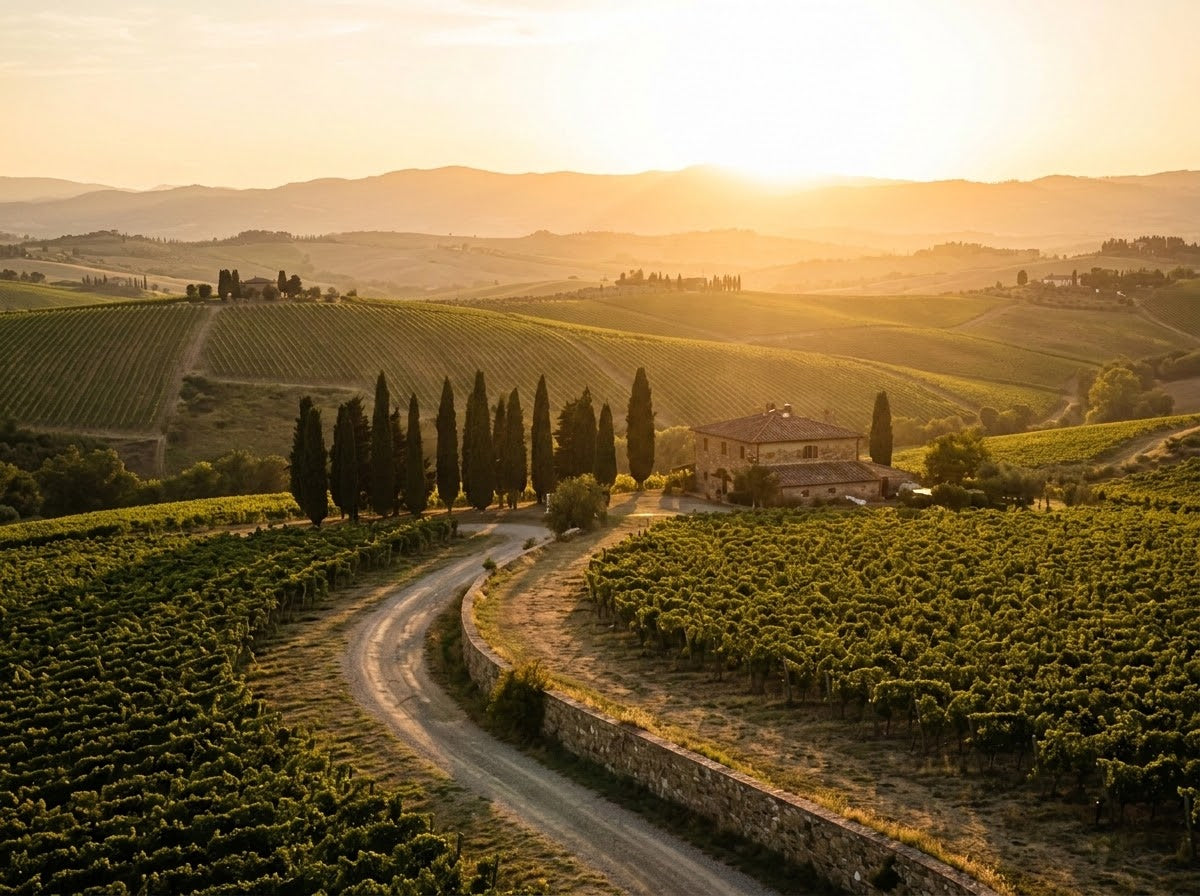
Throughout our beloved Tuscany, vineyards climb sunlit hillsides, olive groves stretch toward the horizon, and stone farmhouses stand where they have stood for generations. The beauty is undeniable, yet what makes these places remarkable is not extravagance; it is their profound sense of balance. Nothing feels excessive.

  1. The vineyard produces what the land can sustain. The family garden provides seasonal abundance. A village festival celebrates local traditions without the need for spectacle. There is a quiet confidence in this approach. Rather than continually striving for more, people learn to recognize the value of enough—a spirit of Gioia, or joy, found in simple abundance.

    Enough time to share a meal; enough food to gather family and friends around the table; enough work to create purpose; and enough rest to fully inhabit the present.

    This perspective stands in stark contrast to cultures that encourage perpetual dissatisfaction. We are regularly reminded of what we lack and how much further we must go before happiness can be achieved. The result is a constant sense of scarcity, even in the presence of true abundance. These moments are not extraordinary, yet together they form the foundation of a rich life.

    The concept of enough extends naturally to food and wine. Throughout Italy, some of the most memorable meals are remarkably simple. Fresh ingredients, prepared thoughtfully and shared generously, create greater satisfaction than any elaborate display.

  2. A loaf of bread, local olive oil, and seasonal vegetables can
    become an experience that lingers in the soul. What matters is not excess. In
    the Tuscan tradition, simplicity is not a lack of resources, but a deliberate
    choice—an exercise in discernment. When you work with ingredients grown on your
    own land, you learn that their natural character needs no ornamentation. The
    goal of the cook is not to create a spectacle, but to curate and offer the
    ingredients from garden to table. This practice of "enough"—using
    only what the season provides invites us to slow down, to engage with the
    textures and aromas in front of us, and to recognize that true abundance lies
    in the quality of our attention, not the quantity on our plates. When we strip
    away the excess, we finally have the space to partake in all that is around us.

    When every moment is filled, there is little room for
    reflection. When fulfillment is constantly deferred to a future achievement,
    the present is easily overlooked. Learning to recognize enough does not mean
    abandoning aspiration; it means ensuring that ambition remains a tool rather
    than a master. This balance creates a wealth measured in connection rather
    than consumption—in time rather than things. It is a gentle reminder that
    fulfillment begins when we learn to appreciate what is already in front of us.