
The Aurea Philosophy: Building a Life, Not Just an Estate


August 19, 2026 | Maja Randall

Introduction

The English language is an engine of precision, but it can stall on words that are conceptual versus specific. When we reach for the word Aurea, English offers us only 'golden'—a term synonymous with Jewely, currency, or  the material weight of metal. It describes the object, but misses the spirit. In Italian, however, Aurea is not a color; it is a frequency. It is the aura of a moment. It refers to a specific, sacred state of being that exists outside the standard flow of time.

  1. We chose this name for our estate not to denote prosperity, but to define a commitment to a particular atmospheric truth.

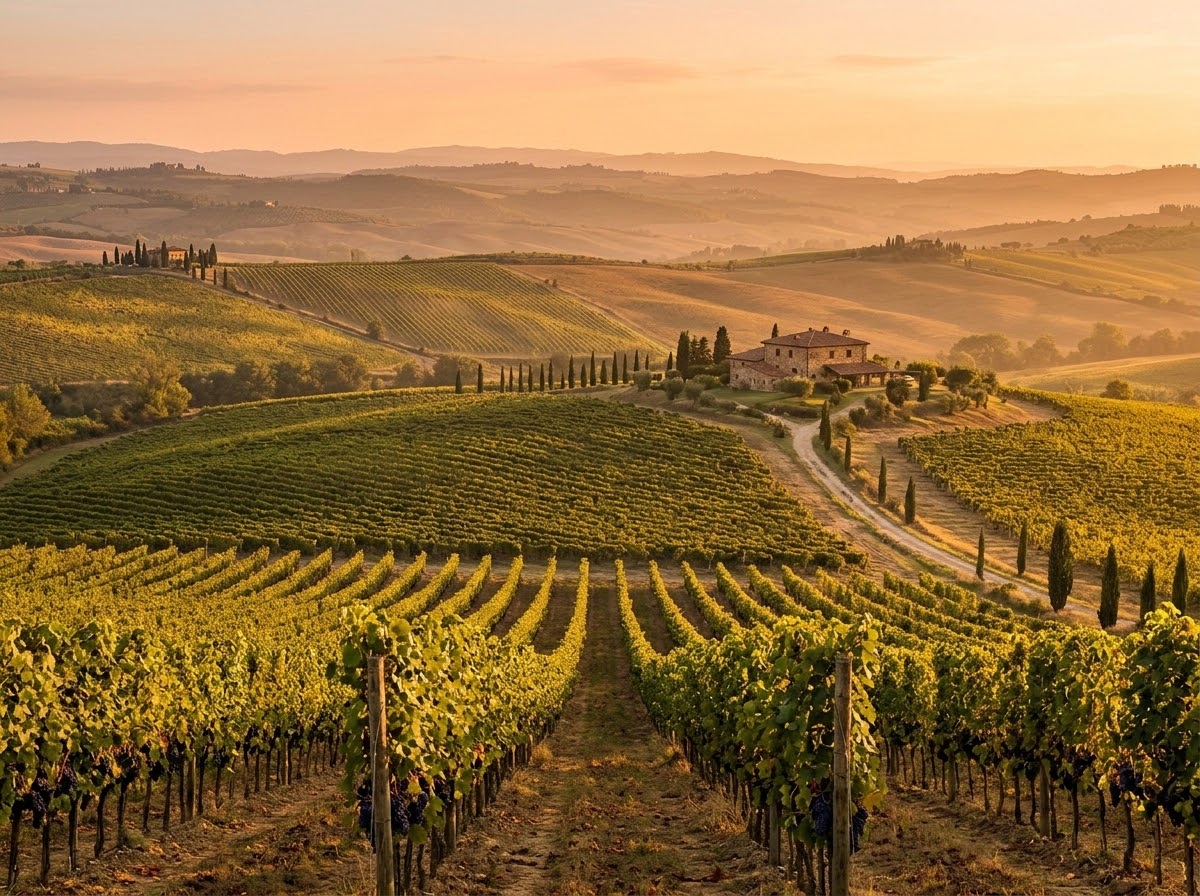
    Consider the stillness of the golden hour—that fleeting, ethereal sliver of time at the margins of the day. At sunrise, the world is in a state of 'becoming.' The light is cool and expectant; the air is unwritten. In that hush, the day poses a quiet, haunting question: How will you spend your day? It is a call to intention, asking us to architect the hours ahead with deliberate grace.

  2. Then comes the sunset. As the light deepens into a bruised, honeyed glow, the world enters a state of 'being.' The stillness here is heavy with memory and resolution. The shadows stretch long, inviting us to shed the noise of action and return to our own center. Here, the twilight asks a counterpoint: How will you spend your night? It is an invitation to rest, to reflect, and to inhabit the harvest of the day’s work.

    This is why we steward the land as we do. We are not merely growing vines; we are curating the physical vessels that capture this light. An estate is the only place where the sun’s path is not an interruption, but an inhabitant. Whether it is the way the light fractures through the leaves of an ancient olive grove or spills across a table where a meal is shared, our labor is meant to honor this convergence of time and grace.

  3. Then comes the sunset. As the light deepens into a bruised, honeyed glow, the world enters a state of 'being.' The stillness here is heavy with memory and resolution. The shadows stretch long, inviting us to shed the noise of action and return to our own center. Here, the twilight asks a counterpoint: How will you spend your night? It is an invitation to rest, to reflect, and to inhabit the harvest of the day’s work.

    This is why we steward the land as we do. We are not merely growing vines; we are curating the physical vessels that capture this light. An estate is the only place where the sun’s path is not an interruption, but an inhabitant. Whether it is the way the light fractures through the leaves of an ancient olive grove or spills across a table where a meal is shared, our labor is meant to honor this convergence of time and grace.

  4. Ultimately, the Aurea philosophy is an answer to the question the sun asks us at dawn and dusk. It is the realization that we do not need to chase a golden life; we only need to recognize that we are already standing in it. When we stop measuring our worth by the speed of our output, we finally discover the golden truth of enough: that the most extraordinary life is the one found in the quiet, luminous center of the day.