
The Lost Art of Belonging


August 5, 2026 | Maja Randall

Introduction

In a world where people can live in one city, work for a company headquartered in another, and maintain relationships spread across several continents, the concept of belonging has become increasingly elusive. Modern life offers unprecedented freedom of movement, yet many people find themselves searching for a deeper sense of connection, one that cannot be found in frequent travel, career advancement, or the accumulation of possessions.

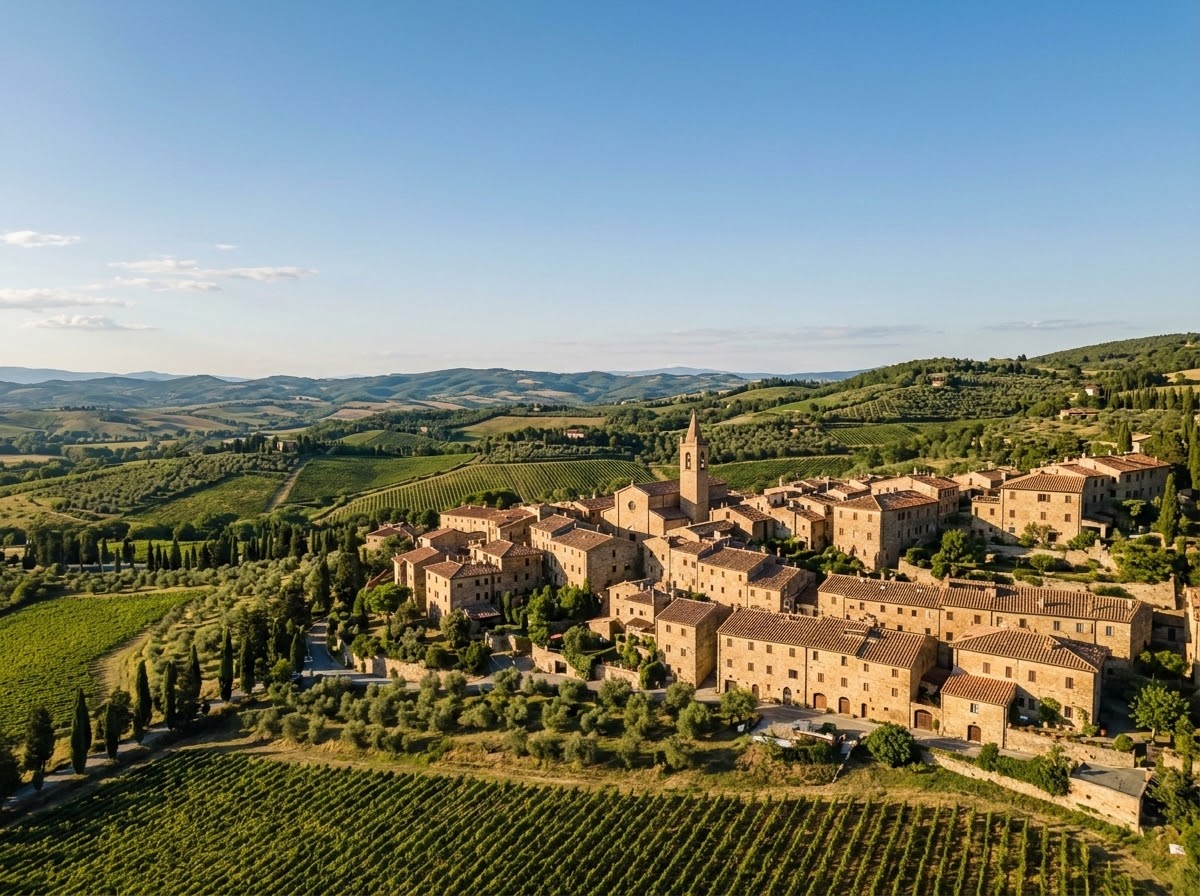
The Italian countryside offers a different perspective. Scattered across rolling hills, coastal valleys, and ancient villages is a way of life that has long understood something the modern world often overlooks: belonging is not a place we discover. It is a relationship we cultivate.

  1. The Continuity of Tradition

    The Continuity of Tradition

    Throughout Italian culture, the bond between people and place remains remarkably strong. Villages are not simply collections of buildings but living communities shaped by generations of shared history. Families often return to the same towns year after year, gathering around the same tables, celebrating the same festivals, and preserving traditions that have endured for centuries. The landscape itself becomes part of the story, holding memories in stone walls, vineyards, olive groves, and narrow roads worn smooth by time.

    There is a certain comfort in knowing that some things remain constant. A church bell rings across the valley as it has for generations. A local baker opens before sunrise. Neighbors stop to exchange greetings in the piazza. Seasonal celebrations mark the passing of time, connecting the present to the past in ways that feel both ordinary and profound.

  2. The Rituals of Daily Life

    The Rituals of Daily Life

    These rituals may seem simple, yet they provide a sense of continuity that many people quietly long for. They remind us that a meaningful life is often built through repetition rather than novelty, through roots rather than constant reinvention.

    Perhaps nowhere is this connection more evident than around the table. In Italy, meals have long served as a gathering place where stories, traditions, and relationships are sustained. Family recipes are preserved not because they are written down, but because they are prepared together. Conversations stretch long into the afternoon or evening. Multiple generations share food, laughter, and memories, reinforcing bonds that strengthen over time.

    The meal itself is important, but it is rarely the central focus. What matters most is the act of gathering. The table becomes a place where belonging is experienced rather than discussed. It is where children learn family traditions, where friendships deepen, and where the ordinary moments of daily life take on greater significance.

  3. The Table as a Sanctuary

    The Table as a Sanctuary

    The Lost Art of Belonging

    This same philosophy extends to the land.
    Across Italy's wine regions, vineyards are often viewed as something more than agricultural assets. They are part of a legacy, cared for with the understanding that true value unfolds over decades rather than seasons. The work required to cultivate a vineyard encourages patience, stewardship, and a long-term perspective. Vines grow slowly. Their character develops over years. The people who tend them understand that they are participating in something larger than themselves. This relationship with the land fosters a profound sense of place.

    The changing seasons are not merely observed but lived. Spring pruning, summer growth, autumn harvest, and winter rest create a rhythm that guides both work and life. Time feels less rushed and more connected to natural cycles. Rather than attempting to control every moment, people learn to work alongside nature, accepting its pace and unpredictability.

  4. Stewarding the Land

    Stewarding the Land

    There is wisdom in this approach. Modern culture often encourages mobility, efficiency, and constant forward motion. While these qualities have undeniable benefits, they can also make it easy to lose sight of the relationships and traditions that anchor us. When every place becomes temporary and every season feels rushed, it becomes harder to develop the deep attachments that give life texture and meaning.

    The Italian countryside quietly reminds us that belonging does not require living in the same village for generations. It does not demand ownership of land or ancestral roots stretching back centuries. Instead, it invites a more intentional way of living, one that values connection over convenience and presence over distraction.
    Belonging can be found wherever people invest themselves fully. It grows when neighbors become friends, when traditions are created and maintained, and when we take the time to understand the stories embedded within the places we call home. It emerges through shared meals, recurring gatherings, and the small rituals that transform familiarity into attachment.

    In the end, belonging is less about geography than participation. The Italian countryside understands this well. Its villages, vineyards, and family tables offer a timeless reminder that a meaningful life is not measured by how many places we have been, but by how deeply we are connected to the places, traditions, and people that matter most.

    In a rapidly changing world, that lesson may be more valuable than ever.

  5. The Philosophy of Presence

    The Philosophy of Presence

    Presence, in the Italian view, is not a passive state; it is an active commitment to the now. It is the deliberate practice of engaging fully with what is directly before us—whether that is a shared meal, a conversation with a neighbor, or the quiet, rhythmic labor of the day. To live with presence is to acknowledge that our lives are not measured by how far we travel, but by how deeply we inhabit our own experiences.

    In our own lives, we can adopt this philosophy without needing to change our geography. We can cultivate belonging wherever we are by prioritizing depth over speed and connection over convenience. We can trade the rush of constant motion for the stillness of being truly engaged with the people and places around us. Ultimately, belonging is not a destination we arrive at, but a state of mind we choose. It is created in the small, repeated acts of showing up—for our families, for our communities, and for ourselves—one present moment at a time.